YANTAI, SHANDONG, CHINA, October 19, 2026 /EINPresswire.com/ —
Yantai Dongruitai Welding and Cutting Equipment Co., Ltd. is expanding its role in the industrial equipment sector through its focus on laser cutting technology, CNC metal processing systems, and welding solutions. As manufacturers across machinery production, sheet metal fabrication, steel construction, and automotive component manufacturing seek more efficient ways to process metal, equipment suppliers are increasingly expected to offer flexible technologies that support both precision and productivity. With a product portfolio covering laser cutting systems, CNC Cutting Machine solutions, and Laser Welding Equipment, Yantai Dongruitai Welding and Cutting Equipment Co., Ltd. serves industrial customers looking for integrated approaches to metal fabrication and production improvement.
Laser cutting has become an important process in modern manufacturing because it enables manufacturers to cut metal components according to digital designs with a high degree of control. Compared with conventional cutting methods, laser systems can provide narrow cutting paths, detailed geometries, and flexible processing options for different production requirements. The actual performance of a machine depends on factors such as laser power, material type, thickness, cutting-head configuration, motion control, and operating parameters. Selecting the appropriate equipment therefore requires an understanding of both the machine’s capabilities and the customer’s production objectives.
Yantai Dongruitai Welding and Cutting Equipment Co., Ltd., operating under the Diter Laser brand, presents itself as a manufacturer of laser cutting machines, laser welding equipment, CNC metal processing solutions, and equipment upgrading services. Its published company information highlights experience in CNC cutting technology and a background in flame and plasma cutting equipment manufacturing. The company also describes its operations as covering equipment assembly, testing, technical support, and after-sales service. This combination of manufacturing and support services reflects the practical requirements of industrial customers investing in production equipment.
Laser Cutting Machines for Diverse Metal Fabrication Needs
Laser cutting equipment is used across a wide range of metalworking applications, including sheet metal processing, machinery manufacturing, structural steel production, and the fabrication of components for industrial equipment. The technology allows manufacturers to transfer digital cutting patterns into physical parts, helping reduce the need for dedicated cutting dies and supporting production runs with changing designs.
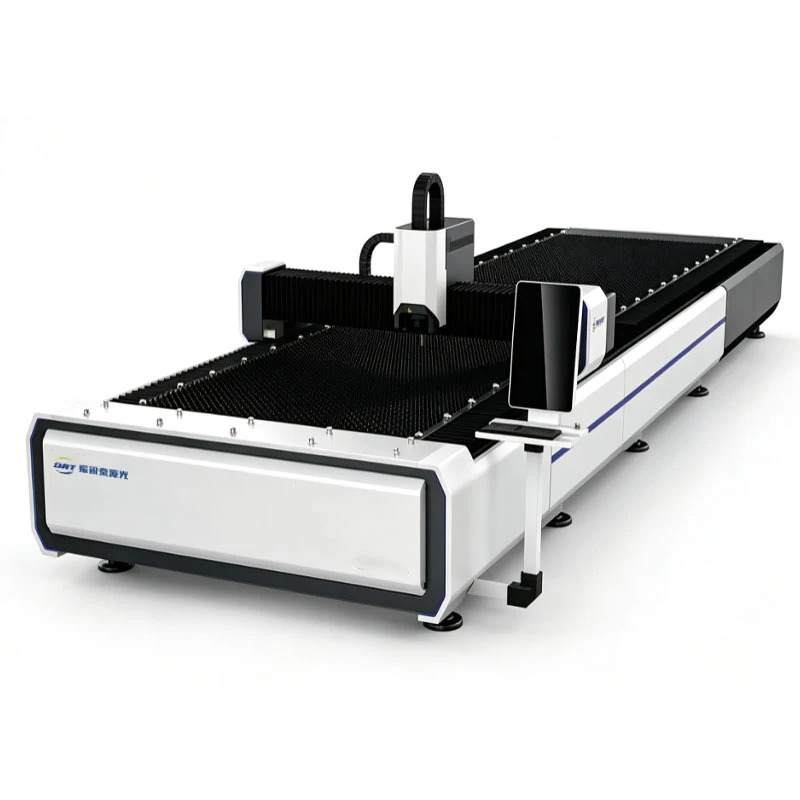
Yantai Dongruitai Welding and Cutting Equipment Co., Ltd. offers several laser cutting machine configurations designed around different material formats and production environments. Its published product categories include fiber laser cutting machines, gantry laser cutting machines, integrated laser cutting machines, split-type laser cutting machines, and laser tube cutting machines. These configurations address different operational needs, from processing flat metal sheets to cutting tubes and larger structural components.
Fiber laser cutting machines are widely used for metal processing because fiber laser sources can deliver concentrated energy to the workpiece. Depending on the laser source, power configuration, material, and machine design, these systems can process metals such as carbon steel, stainless steel, and aluminum. Other compatible materials and thickness ranges depend on the specific machine and processing parameters. For buyers, the key is to match the equipment configuration to the materials and dimensions encountered in daily production.
The company lists sheet metal laser cutting machines and exchange-table laser cutting machines among its featured products. Exchange-table designs allow operators to prepare material on one platform while the machine processes material on another, potentially reducing downtime associated with loading and unloading. The actual efficiency gain depends on the workpiece, handling arrangements, machine cycle, and operator workflow. For factories managing frequent orders or multiple cutting jobs, this configuration can be worth evaluating as part of a broader production plan.
Other configurations address large-format or specialized cutting requirements. Gantry laser cutting machines can be considered for larger workpieces and structural applications, while tube laser cutting machines are intended for tubular materials. Integrated sheet-and-tube systems offer a way to handle more than one material format within a single equipment platform. Such options can help manufacturers compare the advantages of dedicated equipment against the flexibility of a combined system.
CNC Cutting Machine Solutions for Flexible Production
CNC Cutting Machine equipment remains an important part of the metal fabrication industry. Computer numerical control enables cutting paths and machine movements to be managed according to programmed instructions, improving repeatability and reducing reliance on manual guidance for complex shapes. CNC technology is used in different cutting processes, including laser, plasma, and flame cutting, with each process offering different advantages depending on material thickness, accuracy requirements, and operating costs.
Yantai Dongruitai Welding and Cutting Equipment Co., Ltd. lists gantry CNC cutting machines, portable CNC cutting machines, CNC plasma cutters, and flame cutting machines within its CNC cutting product category. This range reflects the continuing role of multiple cutting technologies in industrial production. Laser cutting can be suitable for applications requiring detailed features and precise edges, while plasma and flame systems can remain practical options for particular material thicknesses, job sizes, and cost requirements.
Portable CNC cutting machines may appeal to workshops or job sites where equipment mobility is important. Gantry configurations, meanwhile, can support larger work areas and production environments that process substantial metal plates or structural components. The appropriate design depends on workpiece dimensions, material handling facilities, cutting speed requirements, and the degree of automation expected in the production process.
Plasma cutting uses an electrically conductive gas to generate a high-temperature plasma arc that cuts conductive materials. Flame cutting relies on a combustion-based process and is commonly associated with suitable grades of steel and heavier material sections. Both methods have different process limitations and consumable requirements. By offering several CNC cutting categories, Dongruitai gives industrial buyers a basis for comparing equipment options according to their specific applications.
For manufacturers considering a new cutting system, purchasing decisions should account for more than the machine’s headline specifications. Cutting quality, positioning accuracy, material utilization, maintenance requirements, software compatibility, consumables, operator training, and technical service can all influence long-term operating performance. A clear assessment of current production needs helps buyers avoid investing in capabilities that are unnecessary or selecting a machine that cannot adequately support their planned workload.
Laser Welding Equipment and Integrated Fabrication
Cutting is only one stage of metal fabrication. Many components must also be joined, repaired, or assembled before they become finished products. Welding equipment therefore plays an important role in manufacturing operations that handle sheet metal enclosures, machine structures, metal furniture, equipment frames, and other fabricated products.
Laser Welding Equipment is another major category in Yantai Dongruitai Welding and Cutting Equipment Co., Ltd.’s product portfolio. The company’s website lists laser welding machines and automatic laser welders, positioning them within a broader range of metal-processing and laser automation solutions. These systems can support customers seeking to integrate welding processes with other fabrication operations, depending on the equipment configuration and the level of automation required.
Laser welding uses concentrated laser energy to create a localized heat source at the joint. Under suitable conditions, it can produce narrow welds and limit the spread of heat compared with some conventional welding methods. Its suitability depends on the material, joint geometry, thickness, surface condition, fixture design, and required weld characteristics. Manufacturers must also consider process monitoring, operator safety, shielding arrangements where necessary, and the inspection requirements applicable to the finished component.
Automatic laser welding equipment may be relevant for repeatable production tasks in which consistent positioning and a defined welding sequence are important. Automation can help reduce variation associated with manual handling, but the overall result still depends on correct process development, suitable fixtures, equipment calibration, and quality control. For complex parts or changing product designs, manufacturers should assess how easily the welding system can be adapted to their production requirements.
Combining cutting and welding capabilities can provide practical advantages for businesses that perform several fabrication stages in-house. Cutting determines the dimensions and geometry of individual components, while welding joins those components into assemblies. Coordinating these processes can help manufacturers plan material flow, manage production schedules, and identify opportunities to reduce unnecessary handling. However, the extent of integration depends on each factory’s layout, workflow, and investment priorities.
Manufacturing Applications Across Industrial Sectors
Laser and CNC cutting equipment serves a broad range of industrial applications. In sheet metal fabrication, machines are used to produce panels, brackets, housings, cabinets, and other parts that require defined dimensions and cutout patterns. Machinery manufacturers use cut metal components in frames, guards, supports, and equipment assemblies. Steel structure producers may require equipment capable of handling larger plates, profiles, or structural sections.
Yantai Dongruitai Welding and Cutting Equipment Co., Ltd. identifies machinery manufacturing, sheet metal processing, steel structures, and automotive components among the sectors relevant to its equipment solutions. The company’s published customer case list also references businesses and projects associated with steel structures, steel pipes, industrial manufacturing, and chemical production. These examples indicate the range of industrial environments in which metal cutting and welding equipment may be used, although the precise equipment and scope of each project should be confirmed directly with the company.
In these applications, production requirements vary considerably. A workshop producing small sheet metal components may prioritize flexible programming, quick job changes, and efficient material use. A structural steel operation may focus more on workpiece dimensions, cutting capacity, handling systems, and the ability to process larger sections. Manufacturers with mixed production requirements need to assess whether a single machine can meet their needs or whether multiple specialized systems would be more effective.
The growth of digital manufacturing has also increased the importance of coordination between design software, cutting programs, machine controls, and production planning. CNC systems can help translate design data into repeatable machine movements, but the results depend on compatible software, accurate drawings, appropriate nesting, and operator knowledge. Training and technical support can therefore be important elements of an equipment investment.
Equipment Manufacturing, Customization, and Technical Support
Industrial equipment buyers generally evaluate suppliers according to a combination of product performance, manufacturing consistency, customization capabilities, and service support. Installation, commissioning, operator training, troubleshooting, and spare-parts availability can all affect the usefulness of a machine over its operating life.
Yantai Dongruitai Welding and Cutting Equipment Co., Ltd. states that it has approximately 10 years of experience in CNC cutting and laser equipment manufacturing. The company describes its production process as including assembly and testing and notes that it selects industrial components to support stable equipment operation. It also presents technical assistance and after-sales service as part of its customer support approach.
The company’s website describes OEM and ODM services and customized solutions for different metal processing applications. Customization can be relevant when customers have unusual workpiece dimensions, specific production layouts, specialized cutting tasks, or requirements for integrating equipment into an existing workflow. Buyers should confirm the available options, technical boundaries, delivery schedule, and acceptance criteria for any proposed configuration before placing an order.
Testing and commissioning are important steps in the deployment of industrial cutting and welding systems. A machine must be evaluated under conditions relevant to its intended use, including the materials and thicknesses it will process. Customers may also need to review cutting samples, edge quality, positioning accuracy, cycle time, and the repeatability of results. For welding applications, test procedures may additionally cover joint strength requirements, weld appearance, and applicable inspection standards.
Long-term maintenance is another consideration. Laser systems can include optical components, cutting heads, motion systems, control units, cooling equipment, and other parts that require appropriate inspection and care. CNC plasma and flame cutting systems have their own consumable and maintenance requirements. Establishing a suitable maintenance schedule and ensuring operators understand routine procedures can help support equipment reliability.
For overseas buyers, communication and service arrangements should be clarified early in the purchasing process. Questions about installation support, spare parts, remote assistance, documentation, packaging, and shipping should be addressed before an order is finalized. Clear agreements help both parties understand their responsibilities and reduce the risk of delays during equipment deployment.
Selecting the Right Laser Cutting Equipment
The best machine for a particular operation depends on the work being produced rather than on a single specification. Buyers should begin by identifying the material types, thickness range, maximum workpiece size, required tolerances, expected production volume, and range of part geometries. These details help narrow the choice between flat-sheet, tube, gantry, integrated, and other machine configurations.
Operating costs should also be considered alongside initial purchase price. Energy consumption, consumables, maintenance, replacement parts, material utilization, labor requirements, and production downtime all contribute to the total cost of ownership. A system with a higher initial investment may be justified when it offers capabilities that directly address a factory’s production constraints, but this should be evaluated using realistic operating assumptions.
Safety and compliance are equally important. Industrial laser equipment requires suitable protective measures, controlled access, appropriate operator training, and compliance with applicable workplace and machinery regulations. Plasma and flame cutting operations also require safeguards related to heat, sparks, fumes, and material handling. Manufacturers should evaluate these factors as part of equipment selection and installation planning.
As industrial manufacturers continue to refine production processes, demand remains for equipment that can support precision, repeatability, and flexible manufacturing. Laser cutting, CNC cutting, and laser welding each play distinct roles in metal fabrication, and their value depends on how well they match the production task. Suppliers with multiple equipment categories can help buyers compare possible approaches and develop solutions around actual manufacturing requirements.
Yantai Dongruitai Welding and Cutting Equipment Co., Ltd. participates in this market through its range of laser cutting machines, CNC Cutting Machine products, and Laser Welding Equipment. Its focus on metal processing technology, customized equipment solutions, and technical support gives industrial customers a starting point for evaluating equipment for sheet metal, structural steel, machinery, and other fabrication applications.
About Yantai Dongruitai Welding and Cutting Equipment Co., Ltd.
Yantai Dongruitai Welding and Cutting Equipment Co., Ltd. is a metal processing equipment manufacturer based in Yantai, Shandong Province, China, operating under the Diter Laser brand. The company specializes in laser cutting machines, CNC cutting equipment, laser welding systems, laser marking equipment, and laser automation solutions. Its product portfolio includes fiber laser cutting machines, gantry laser cutting machines, integrated and split-type laser cutting machines, tube laser cutting machines, gantry and portable CNC cutting machines, plasma cutters, flame cutting machines, laser welding machines, and automatic laser welders.
The company describes its business as combining equipment manufacturing, technical support, and after-sales service. Its published information highlights experience in CNC cutting technology, assembly and testing processes, selected industrial components, and customized solutions for metal fabrication applications. The company serves manufacturers seeking equipment for sheet metal processing, steel structures, machinery production, automotive components, and other industrial uses.
For further information about product specifications, available machine configurations, customized solutions, and technical support, buyers can visit www.diterlaser.com. Through its portfolio of cutting and welding technologies, Yantai Dongruitai Welding and Cutting Equipment Co., Ltd. aims to support manufacturers in developing metal processing workflows suited to their production requirements.
Address: No. 55+, Binglun Road, Zhifu District, Yantai City, Shandong Province, China
Official Website: https://www.diterlaser.com/
YuQing Han
Yantai Dongruitai Welding and Cutting Equipment Co., Ltd.
Peini769@gmail.com
Legal Disclaimer:
EIN Presswire provides this news content “as is” without warranty of any kind. We do not accept any responsibility or liability
for the accuracy, content, images, videos, licenses, completeness, legality, or reliability of the information contained in this
article. If you have any complaints or copyright issues related to this article, kindly contact the author above.

Media gallery